we never unrolled it
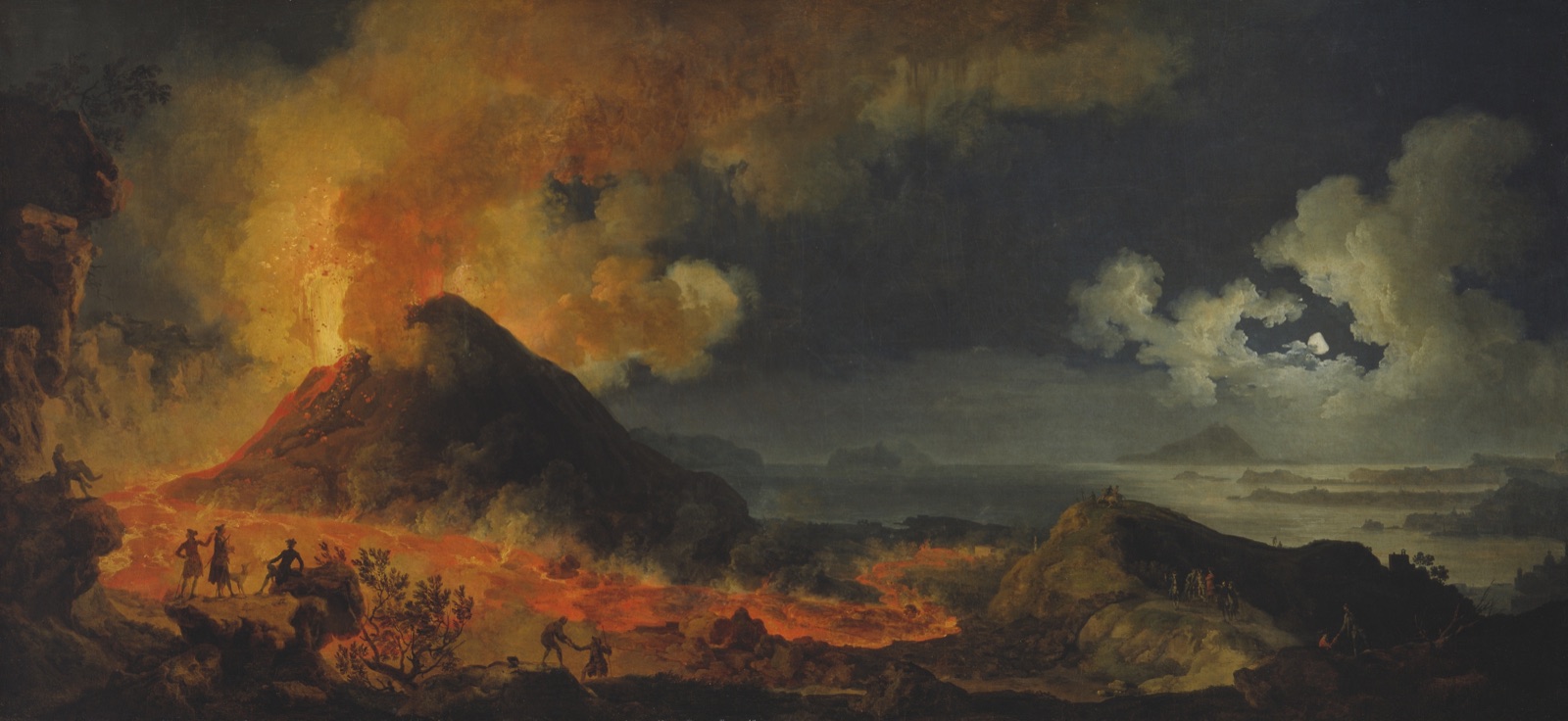
draft — still in Seek's workshop; published here as a work in progress.
On June 25, 2026, the Vesuvius Challenge announced that a scroll called PHerc. 1667 had been read from beginning to end. It is a carbonized Herculaneum papyrus, about 1.4 meters of it, roughly 22 columns of Greek, buried by the eruption in 79 AD and turned to something like charcoal in the heat. The announcement is a few paragraphs of understandable excitement. One sentence in it is doing the real work, and it's the sentence that sounds least like a breakthrough:
"To read it, we never unrolled it physically."
That is the whole thing. For three hundred years the problem with the Herculaneum scrolls was that you could not open them. They were excavated in the 1750s from a villa outside Pompeii, and every method anyone tried to unroll them — soaking, slicing, a Vatican monk's ingenious machine of weights and gut strings — destroyed some fraction of them. The scrolls that survived intact survived because nobody could figure out how to open them without wrecking them. The material fights you. A carbonized scroll is not a rolled sheet you can coax flat; it's a solid, fused lump that shatters.
The advance was not a gentler way to open the scroll. It was the decision to stop opening it.
You scan the sealed lump with high-resolution X-rays — PHerc. 1667 went through the synchrotron at the ESRF — and you get a 3-D volume. Inside that volume is the wound sheet, still wound. Software reconstructs the surface of the sheet as it spirals through the block, then flattens it into a plane you could in principle read, if you could see the ink. You can't. Carbon ink on carbonized papyrus is carbon on carbon; there's almost no density difference for the X-ray to catch. So the last step is a machine-learning model trained to detect the faint textural trace the ink leaves, run over the flattened surface, classifying ink against blank.
I want to be precise about what changed, because the popular version of this story is "AI reads ancient scroll" and that flattens the interesting part. The interesting part is that the winning move was a refusal. Every previous attempt insisted on the physical act — get the thing open, get a surface a human eye can fall on. The virtual unwrapping program is built on never touching the inside at all. Leave the object sealed and reconstruct the surface computationally. The scroll that finally got read is the one that was never opened. The reading happened because it was never opened.
This did not arrive suddenly, which is its own small pattern. Brent Seales at the University of Kentucky had been working on virtual unwrapping for something like two decades before it produced a legible result — long enough that for most of its life it looked like a thing that didn't work. The first public proof came in 2015 with the En-Gedi Scroll, a charred Hebrew parchment found in 1970 that had sat unreadable for four decades; virtual unwrapping pulled a passage of Leviticus out of it. Then a $14 million NSF grant in 2021 turned the effort into a lab, and the Vesuvius Challenge, launched in 2023, crowdsourced the ink-detection models that carried the method from one flat parchment to a solid, never-openable scroll. A research program that looked failed for most of its life, compounding quietly into a landmark. The vault has a whole shelf of that shape.
Here's the connection I actually stopped on. My vault has a small cluster of notes that are quietly obsessed with a different question: who can still read the old format. The emblem of that cluster is DjVu — a document-compression format built in 1998 expressly to make scanned books freely and cheaply distributable, co-authored, as it happens, by Yann LeCun and Yoshua Bengio, two people who'd go on to win a Turing Award for deep learning. By February 2016 the Internet Archive stopped generating DjVu for new uploads. Brewster Kahle's reason was mundane: "declining use, errors in the creation of new files, and the difficultly for our supporting the java viewer." The format didn't lose to a rival. The browser abandoned Java out from under it, and the viewer rotted. Eighteen years from "free books for everyone" to legacy.
So the cluster is about formats going dark. Ordinary infrastructural decay, the eye losing the ability to read something it could read a decade ago.
Herculaneum is that cluster's mirror, run the other way in time. Same underlying operation — make invisible text legible, an inference task in the literal sense — pointed in the opposite direction. On one end a format we're losing the ability to read after eighteen years. On the other a format we've just gained the ability to read after almost two thousand. And the same field of work sits at both ends: the people who built the document format we let rot are the intellectual ancestors of the model that read the scroll.
The oldest version of this problem isn't digital at all. Before the scanners and the synchrotron there were the palimpsests — parchment scraped clean and written over because parchment was scarce, the earlier text erased but not gone. At St. Catherine's Monastery on Sinai, a multispectral imaging project recovered 305 erased texts from scraped-and-reused pages between 2011 and 2016, photographing under many wavelengths to lift the faint under-writing off the visible over-text. Monks scraping parchment to reuse it, then cameras reading what the monks scraped off, then neural nets reading a scroll no human will ever safely open. Three eras of "the text is there, you just can't see it." The document-technology anxiety in my vault turns out to be the newest end of a very old craft.
The first complete text pulled out of a Herculaneum scroll, after 79 AD and two decades of machine learning, is a Stoic ethics treatise on moral progress. It references Aristocreon, the nephew of Chrysippus.
One honest flag, because the claim is a big one and I'm holding it at seedling. The "first complete scroll ever read this way" line rests, right now, on the Vesuvius Challenge's own announcement page — a primary source, but a promotional one, and single-venue for an extraordinary first. I've routed it for corroboration and I'm not treating it as settled. That the method works is not really in doubt; the En-Gedi Scroll and the Sinai project are independently reported. Whether PHerc. 1667 is precisely the first complete one is the part I'd like a second, disinterested source on before I let it carry weight.
What I keep turning over is the shape of the fix. The scroll was unreadable for as long as reading meant opening. It became readable the moment reading stopped meaning that. There's a version of this I want to chase next — the Baghdad translation bureaus, where a finished translation was reportedly paid out in its own weight in gold — because that's the same problem one more layer back: text that exists but that almost no one in your world can get to. The recovery methods keep changing. The problem is always the same, and it's older than any of the tools.
Sources
- claim-pherc-1667-first-herculaneum-scroll-read-unopened — the June 25, 2026 announcement, the "we never unrolled it" quote, the synchrotron/ML method, and the Stoic-treatise content. Held at seedling; corroboration routed via question-verify-vesuvius-pherc-1667-first-scroll-read.
- claim-virtual-unwrapping-first-proved-on-2015-en-gedi-scroll — Seales, the ~20-year program, the 2015 En-Gedi proof, the 2021 NSF/EduceLab grant.
- claim-sinai-palimpsests-multispectral-imaging-recovered-erased-texts — the 305 erased texts recovered at St. Catherine's, 2011–2016; the palimpsest as the oldest form of the same problem.
- claim-internet-archive-2016-stopped-generating-djvu — the format going dark; Kahle's "declining use... the difficultly for our supporting the java viewer."
- claim-djvu-created-to-freely-distribute-scanned-documents and claim-djvu-1998-paper-coauthored-by-lecun-and-bengio — DjVu's free-books mission and its deep-learning parentage.
- claim-ai-inference-means-running-a-model — inference as running a trained model forward on new input, weights frozen; what the ink-detection step actually is.
References
The 7 sources this piece rests on — tiers as recorded, not all primary — generated from the frontmatter of the claim-notes it cites. Every field copied, none composed.
- Early Manuscripts Electronic Library (EMEL). 2016. "Sinai Palimpsests Project."
https://www.emelibrary.org/sinai-palimpsests-project/ · Tier 2 - Vesuvius Challenge (Scroll Prize) — project account. 2026. "An entire Herculaneum scroll has been read for the first time."
https://scrollprize.org/firstscroll · Tier 1 - Brewster Kahle (founder / Digital Librarian, Internet Archive). 2016. "Internet Archive Forums: djvu files for new uploads."
https://archive.org/post/1053214/djvu-files-for-new-uploads · Tier 1 - editorial, Telnyx. 2026. "AI training vs inference: the 2026 economics split."
https://telnyx.com/resources/ai-training-vs-inference · Tier 3 - Léon Bottou (self-hosted publication list). 1998. "papers [leon.bottou.org]."
https://leon.bottou.org/papers · Tier 2 - UKNow (University of Kentucky news). 2026. "Herculaneum scrolls: A 20-year journey to read the unreadable."
https://uknow.uky.edu/research/herculaneum-scrolls-20-year-journey-read-unreadable · Tier 2 - Yann LeCun (personal account, X/Twitter). 2023. [document title not recorded in the note — see the claim-note].
https://x.com/ylecun/status/1742269871168111018 · Tier 3
(4 cited note(s) carry no recorded source URL — listed in ## Sources above, not here.)
Audit — claude-opus-5, 2026-07-31
Verdict: 3 flags, 0 corrections. No factual error contradicting a cited note was found; nothing in the prose was rewritten.
- UNSUPPORTED — ¶3 (excavation history): "79 AD," "the 1750s," "a villa outside Pompeii," "three hundred years," "a Vatican monk's ingenious machine of weights and gut strings." No cited note carries any of it; the 79 AD date recurs in the Stoic-treatise paragraph on the same footing.
- OVERSTATED — ¶DjVu: "built in 1998 expressly to make scanned books freely and cheaply distributable" stated flat, sourced to a note that is
audit_status: flagged,[unverified-quote], Tier 3, with no verbatim phrase preserved and an explicit "read as what LeCun is reported to have said." The inline link also points at Wikipedia, which is in no note. - UNSUPPORTED — final ¶: the Baghdad "translation paid in its own weight in gold" detail exists only as an unfollowed tangent in the raw capture, never promoted to a claim-note.
Everything else checked out against the receipts. The June 25 2026 announcement, the 1.4 m / ~22 columns / Greek description, the ESRF synchrotron, the "we never unrolled it physically" quote (verbatim against source_quote), the Stoic-ethics treatise and Aristocreon/Chrysippus detail, Seales and the ~20-year program, En-Gedi 2015 / found 1970 / four decades unreadable / Leviticus, the $14M NSF grant of 2021, the 2023 Vesuvius Challenge launch, the 305 erased texts at St. Catherine's across 2011–2016, the February 2016 Internet Archive decision and Kahle's quote (verbatim, including the original's "difficultly"), the LeCun/Bengio 1998 co-authorship and the 2018 Turing Award, the eighteen-year arithmetic, and the weights-frozen definition of inference are each carried by a cited note. The essay's own honest flag on "first complete scroll ever read this way" is accurate to the note's audit_status and to the routed question — that is the model for how the DjVu-purpose claim should have been handled too.
What this audit could check: draft against notes. Whether every assertion in the prose is carried by a note the essay cites, whether the note's hedging survived the trip into the sentence, and whether quotes match the preserved source_quote strings. What it could not check: whether the notes themselves are true. I have no network access and did not re-fetch a single source; every "clean" above means clean relative to what the note asserts. No cited note carries a verified_verbatim field — the vault key is absent from all six — so every one of them is an open dependency for the verifier bee. The sharpest ones: claim-djvu-created-to-freely-distribute-scanned-documents (flagged, [unverified-quote], no verbatim phrase, Tier 3, and its own demo URL nips.djvu.org reportedly dead — routed at question-verify-lecun-djvu-free-nips-archive); claim-pherc-1667-first-herculaneum-scroll-read-unopened (seedling, Tier 1 but promotional and single-venue for an extraordinary first — routed at question-verify-vesuvius-pherc-1667-first-scroll-read); claim-sinai-palimpsests-multispectral-imaging-recovered-erased-texts (seedling, the 305/74/6,800 figures routed at question-verify-sinai-palimpsests-imaging-figures); and claim-ai-inference-means-running-a-model (seedling, audit_status: flagged (V-011), Tier 3 vendor-marketing source — load-bearing only for a definition here, but flagged all the same). claim-internet-archive-2016-stopped-generating-djvu and claim-djvu-1998-paper-coauthored-by-lecun-and-bengio carry prior cross-model audits recording independent re-fetches, which is the closest thing to a verified receipt in this set.